Carelon Wellbeing
UST Global {Moonraft}
2021–2024
From friction to function
Rebuilding a mental health platform that improved outcomes by 78%.
Industry
Healthcare
My role
UX designer
Platform
Web portal + mobile
Outcome
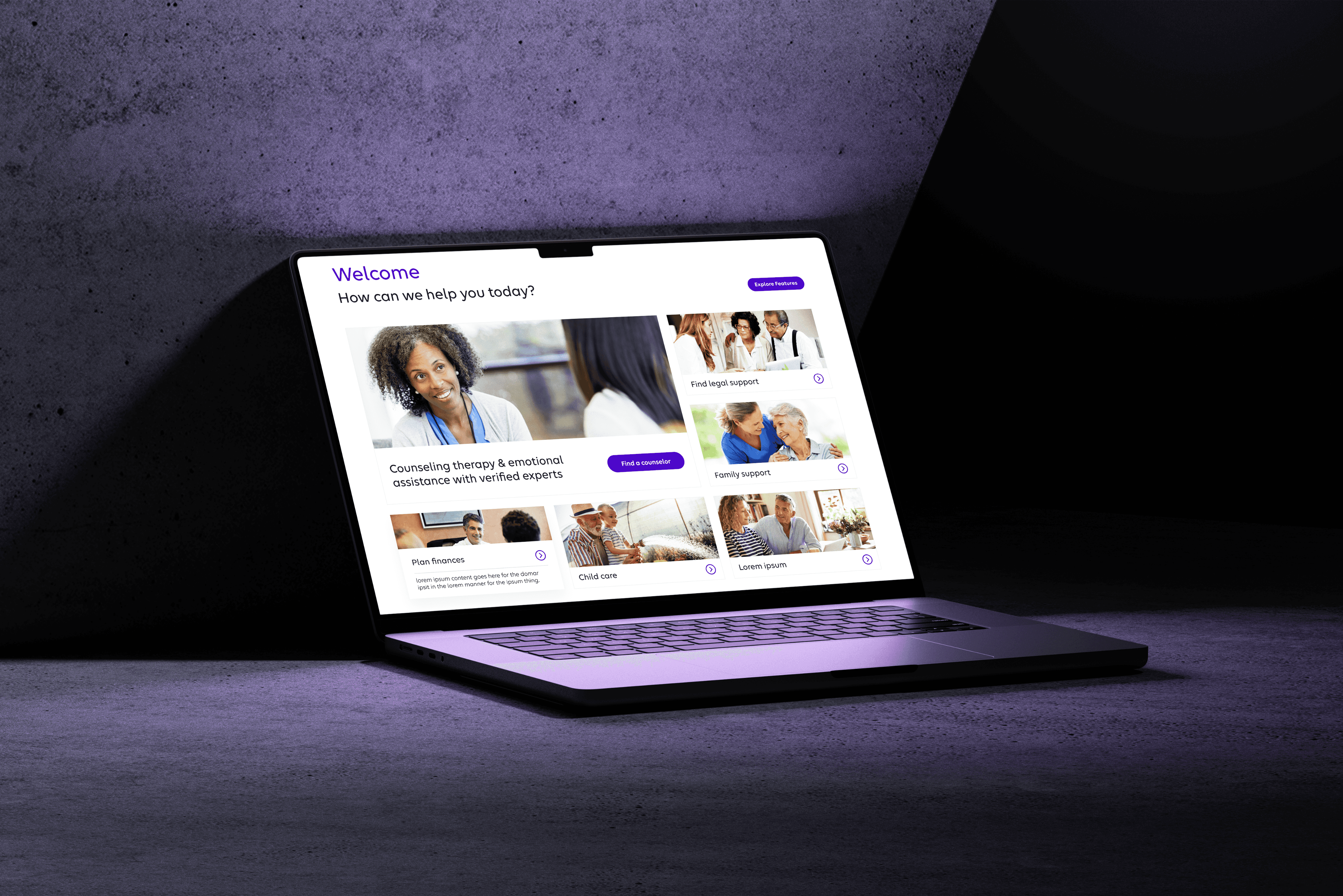
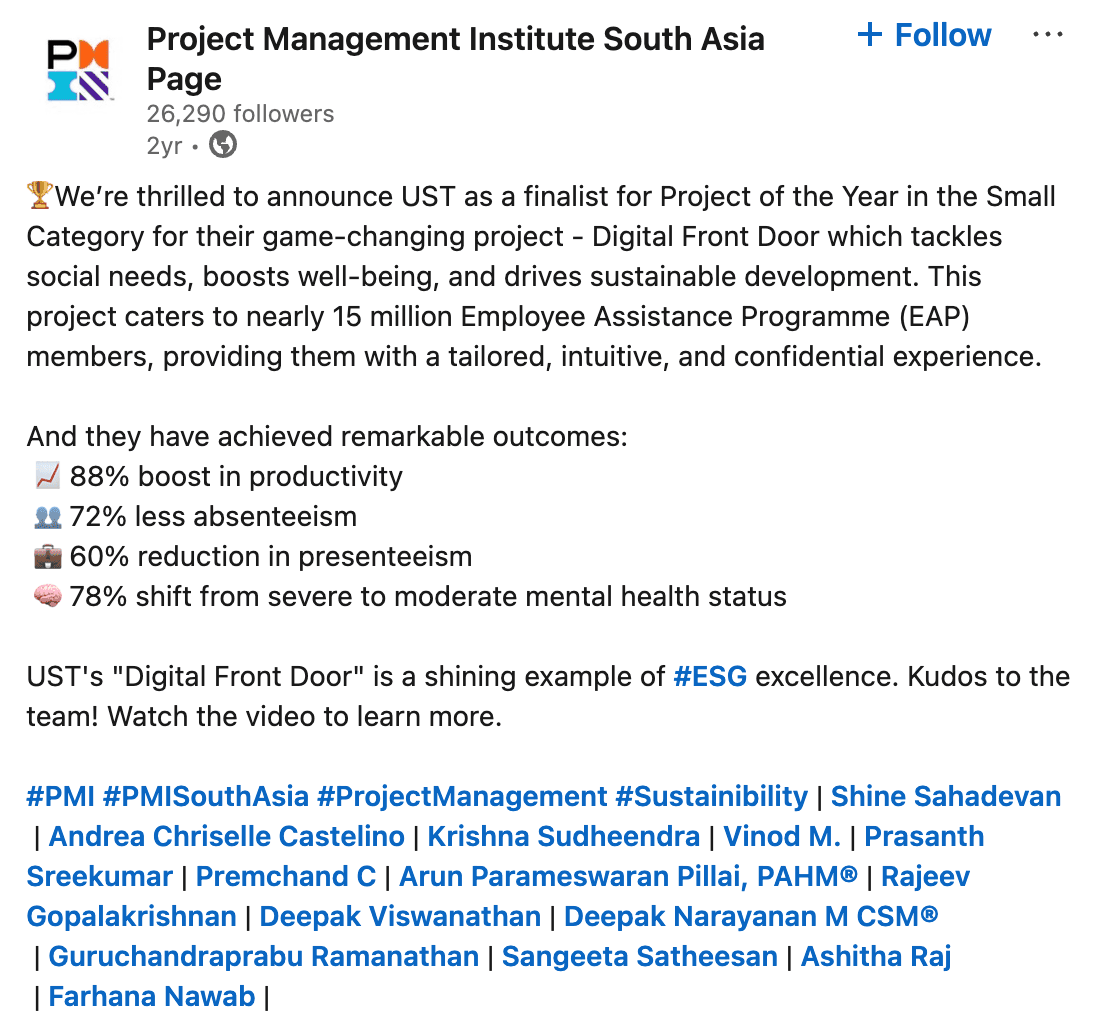
88% boost in productivity · 72% reduction in absenteeism · 78% shift from severe to moderate mental health status and finalist, Project Management Institute South Asia.
Context & the problem
What is this?
Carelon Wellbeing is an Employee Assistance Program, a federally supported benefit that gives employees access to mental health counselling, financial planning, legal resources, and crisis support. The digital portal is the primary access point for employees seeking help. For many users, it's the first place they turn when they're already in distress.
What was broken?
When Moonraft was engaged, the portal had three compounding problems. Appointment scheduling didn't exist at all, a feature present in every major competitor including Aetna, Lyra, and Modern Health. The volume of available resources was significant, but poor categorisation buried them under confusing labels, overwhelming users before they could find what they needed. And nearly every meaningful task — from finding a counsellor to accessing crisis support — required manual effort or a call to customer service, because the portal couldn't self-serve its own users.
Why it mattered?
EAPs are meant to serve a purpose. When the portal fails, employees in vulnerable states don't get support. They close the tab and call HR instead, or don't seek help at all. The clinical consequences (unresolved mental health struggles), the organisational consequences (absenteeism, reduced productivity, presenteeism), and the business consequences (low EAP utilisation rates that undermine the program's value to employers) all trace back to the same root: a platform too difficult to use at the moment it mattered most.
Challenge
How might we rebuild the Carelon portal so that an employee in distress can find the right resource, book an appointment, and access crisis support, without needing to call customer service or already know how the system is organised?"
Role & constraints
My role
{UX Designer} : Owned secondary research, ideation and conceptualisation, wireframing, design walkthroughs, developer handoff, and client presentations
Team
Design lead, 2 visual designers, 1 standby visual designer, me as UX designer · 16 developers, PMs, scrum masters, and business analysts on the engineering side
Timeline
Discovery: 4 weeks · UX and visual design: ongoing across multiple release cycles (2021–2024)
Constraints
Portal needed to remain highly configurable per employer client (Verizon-specific landing pages, client-specific content) · Clinical content required approval from Carelon's medical editorial team · SSO and data authentication integration requirements constrained certain interaction patterns · Eligibility validation deliberately removed from the access path per Carelon's explicit requirement
Research & discovery
This is what we knew going in
Stakeholder interviews across operations, product, customer service, technology, and business teams surfaced five consistent observations:
Easy access to services
Insight 1
Access - Getting members access to appointment is key
Access to services - Carelon do not want to validate eligibility
Member help
Insight 3
Figure out what member needs are
Very quick peeling back is important
Specific aspects of quick intervention
Digital platform
Insight 5
Clunky
Fresh modern design
Linking the illustrations and visual communication to the mood and expectations of members
Assistance
Insight 2
People needs/Substance needs/family needs/dependency needs
Support and immediate assistance
Non-product driven demands
Need based navigation not a product based navigation
Relationship-driven
Portal capabilities
Insight 4
Highly Configurable and nimble
Capable enough to process as the services & partnership
Analytics and data driven decisions
Data & SSO authentication integration
Industry stats
60%
of Gen Z employees surveyed report that mental health resources are important in selecting an employer.
What we did
We mapped emerging experience trends across the EAP landscape against two axes: engagement (level of member participation) and impact (effect on employer and employee outcomes). This produced a prioritised feature landscape that identified what the market was moving toward versus where Carelon currently sat.
Impact: High
Impact: Low
Engagement: High
Engagement: Low
Coaching and intervention
New skill development
Playbooks, customer stories
Awareness
Customized assistance
Training and education services
Motivation
Online EAP experts
Voice tech assistance
Multi-lingual support
Locating effective care
Management consultation
Leveraging behavioral technology
Critical incident support
Multiple device integrations
Impact
The effect the feature has for employers and employees that make them choose the specific EAP.
Engagement
The participation from members calculated basis of their interests, industry stats and expectations from the EAP.
Competitor analysis
We benchmarked Carelon against Aetna, Lyra, and Modern Health across key parameters: personalisation quality, counsellor-finding experience, online appointment scheduling, and resource categorisation. Appointment scheduling was the most glaring gap — present in all three competitors, absent in Carelon entirely.
Stakeholder Interviews
We spoke with operations, product, customer service, technology, and business teams. These weren't user interviews — they were organisational diagnostic sessions that surfaced the gap between what the portal was supposed to do and what it was actually delivering.


David Rudolff
What we found
Insight 1
Navigation was product-organised, not need-organised.
The portal's structure reflected internal product categories, not how members think about their own needs. An employee under work stress doesn't navigate to "Emotional Wellness Topics" — they think "I need to talk to someone." The mismatch was the primary abandonment driver.
Insight 2
Appointment scheduling was the most critical missing capability.
Every competitor had it. Carelon required members to call customer service. This single gap was responsible for a disproportionate volume of inbound support calls and was the feature stakeholders named most consistently as a reason members disengaged.
Insight 3
Information overload was preventing engagement.
The volume of available resources — articles, podcasts, videos, financial tools, legal resources — was actually a liability because it was presented without intelligent filtering or personalisation. Members saw everything at once and engaged with nothing.
Insight 4
Emergency and crisis support was buried.
Critical incident resources were not surfaced contextually or proactively — members had to know to look for them. For a mental health platform, this was the most consequential usability failure.
Defining the direction
Understanding our personas
The member needs and trends from the industry pointed towards the importance of access to mental health resources, clinical improvements, and visually trustworthy experiences at the core of decision-making when choosing EAP programs. These in turn influence employers which have effective assistance benefits for their employees.

Rick James
Age: 44 years old
Work: Sr Consultant
Family: Family with 3 kids
Attribute: First time EAP user
“I’m trying to understand my options to help me with all the stress I have been facing at work and home”.
Expectations →
Onboarding
Understanding the details of his benefits and his options for help upfront. Knowing the scope and limits for assistance.
Usage
Building the necessary network, exploring different covered/uncovered options, as well as learning the process of setting up appointments.
Retention
Follow-ups, costs, and documentation for easy access to mental-health resources if any.
Rick is a first-time EAP user and is here to explore his benefits. He’s unaware of the benefits in detail and wants to understand his options, especially with the safety and confidentiality that he expects. He is unsure of the kind of help he needs and hopes the program in assisting him with the right resources.

Jane Smith
Age: 32 years old
Work: Software Consultant
Family: Single mother
Attribute: Returning EAP member
“I’m trying to reach back into my care network to ensure a follow-up of appointments and seek support.”
Expectations →
Onboarding
Have direct access to past appointments and records and easy access to the most relevant details based on her past appointments.
Usage
Having the necessary specialised care network set up to help her with her health. Getting information related to her appointments upfront and in real-time
Retention
Making use of her digital resources to keep up with her mental health Having a robust system of care that ensures follow-ups and feedback
Jane Smith is a returning member to her EAP portal post an initial appointment with her psychologist for a follow-up. She has limited time and options and feels safe having a conversation over a video call.
Principles for digital transformation
Self-serving options
Principle 1
Upfront options for direct access to required resources without having the need to reach out customer service.
Guided communication
Information clarification
Information Prioritization
Principle 2
Building channels to reduce information overload with gateways for efficient visual and content focused de-clutter.
Ensuring personalization
Approachble and communicative
Evolutionary guidance
Principle 3
Guiding members through the experience with ease and proactive communication when needed.
Guided communication
Prioritizaing member needs and actions
Client-driven customizations
Principle 4
Providing options for customization to ensure employer and employee engagement.
Approachable and communicative
Inclusive and communicative
Real-time updates & feedback
Principle 5
Plan content as well as recommendations based on real-time member behavior and landscape.
Ensuring personalization
Inclusive and communicative
Cohesive wellness
Principle 6
Ensuring mental health-focused proactive and dynamic digital experience through multiple channels.
Prioritizing member needs and actions
Approachable and communicative
What we decided not to do
The original portal structure front-loaded members with the full resource library immediately on entry — the assumption being that showing everything gave members maximum choice.
The research showed this was causing paralysis, not empowerment. We made the deliberate decision to invert this: the entry experience would surface primary actions in the form of custom cards and one contextual recommendation, with everything else one step deeper.
This required a significant argument with stakeholders who equated "more visible content" with "higher engagement."
The Quick Bite feature — a short intelligent quiz that routes members to relevant resources — was the alternative we proposed to replace undifferentiated content browsing.
Design process
Information architecture
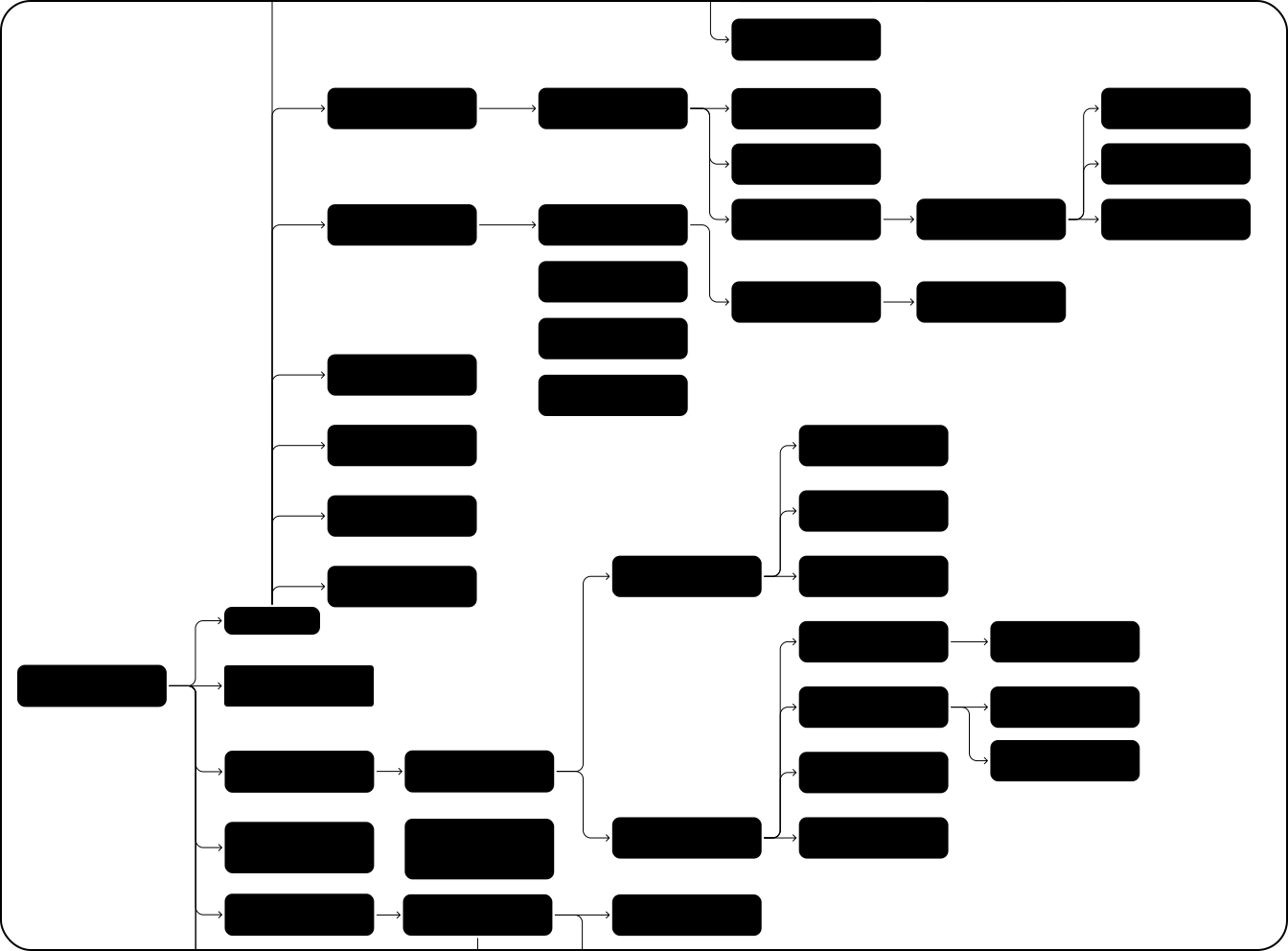
A glimpse of the information architecture
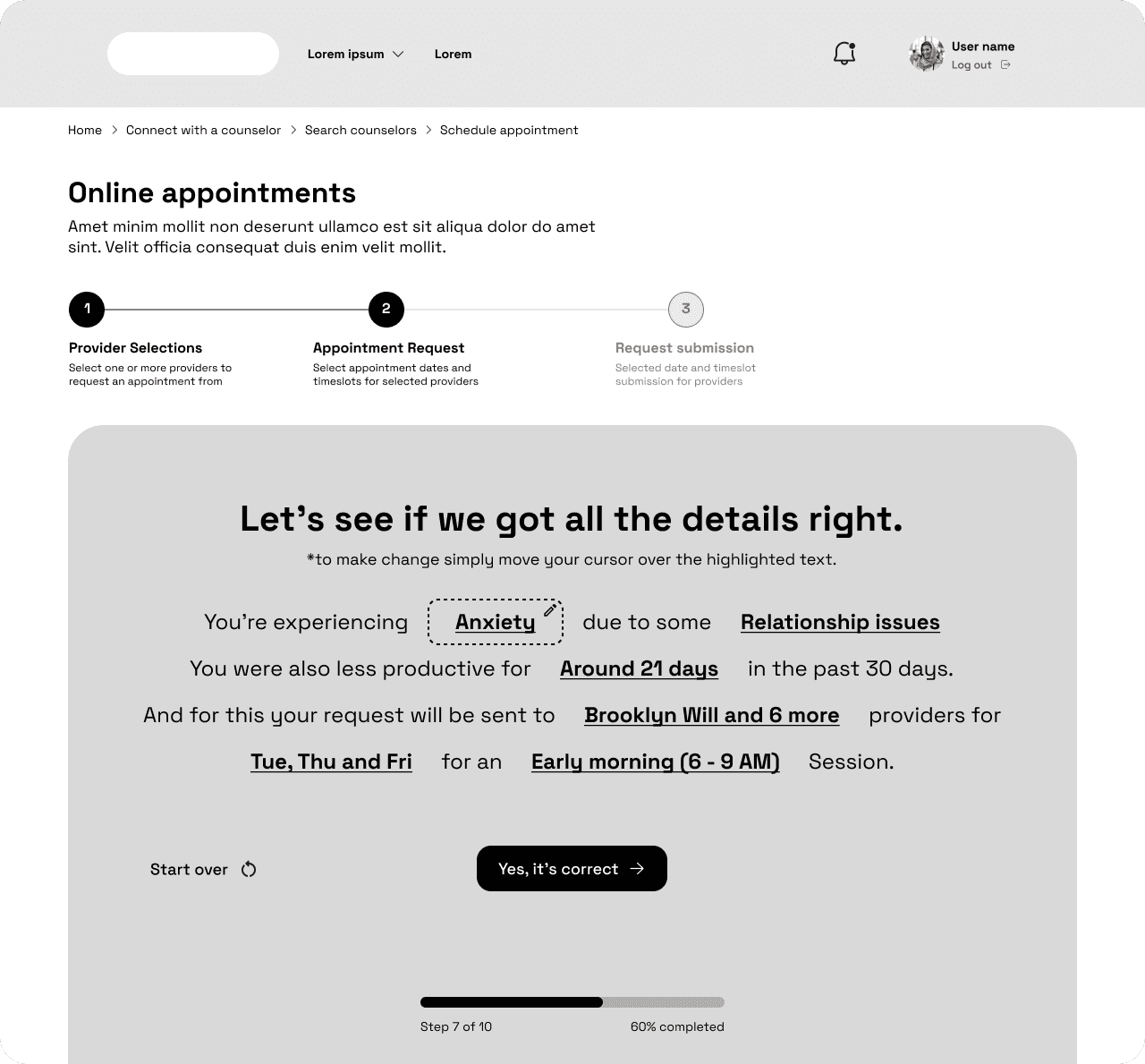
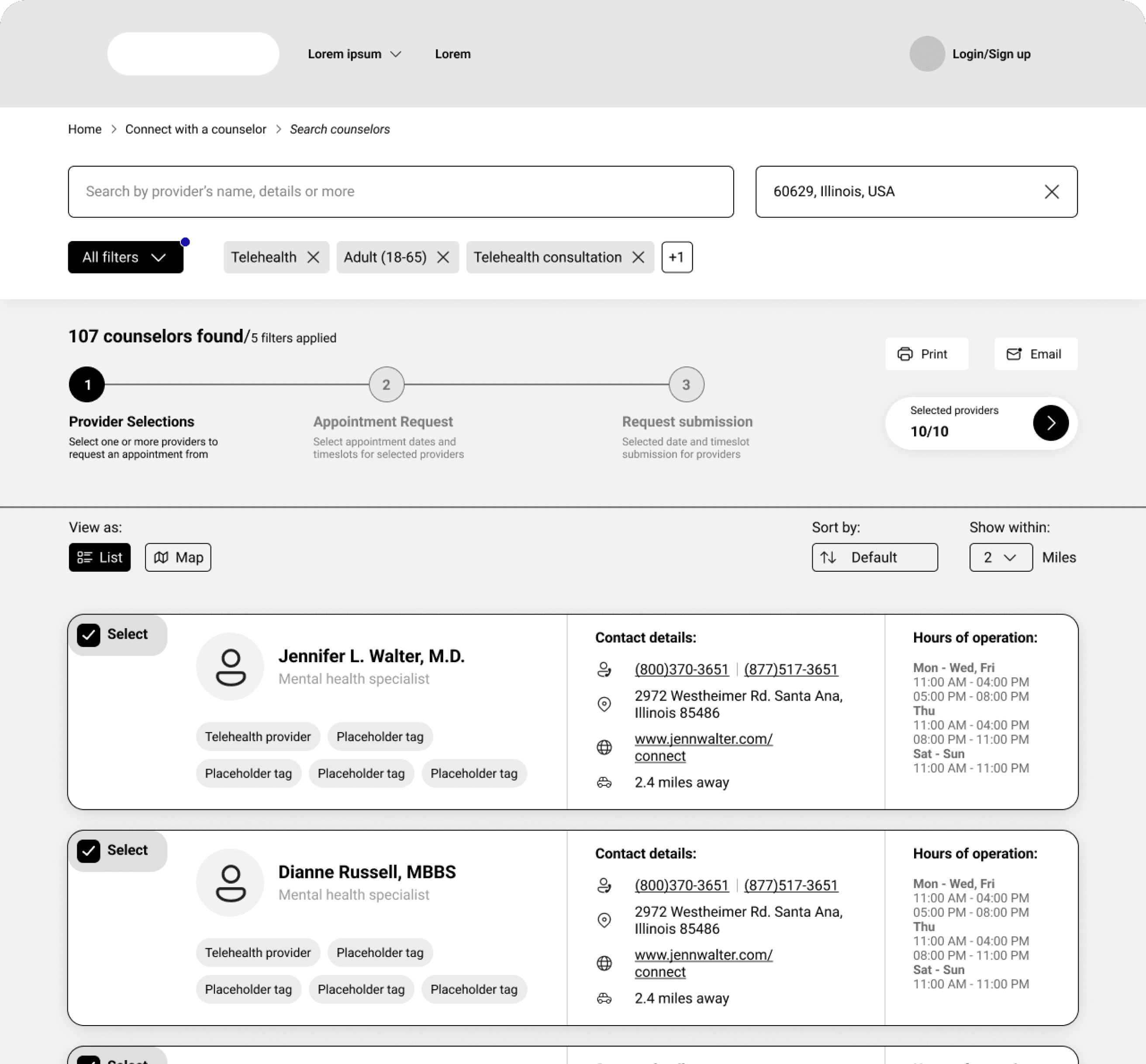
Mid-fidelity wireframes
Our design envisionment started by creating wireframes that helped us develop product ideas and get stakerholders’ approval. These wireframes provided a solid starting point for the subsequent development stages.
System design
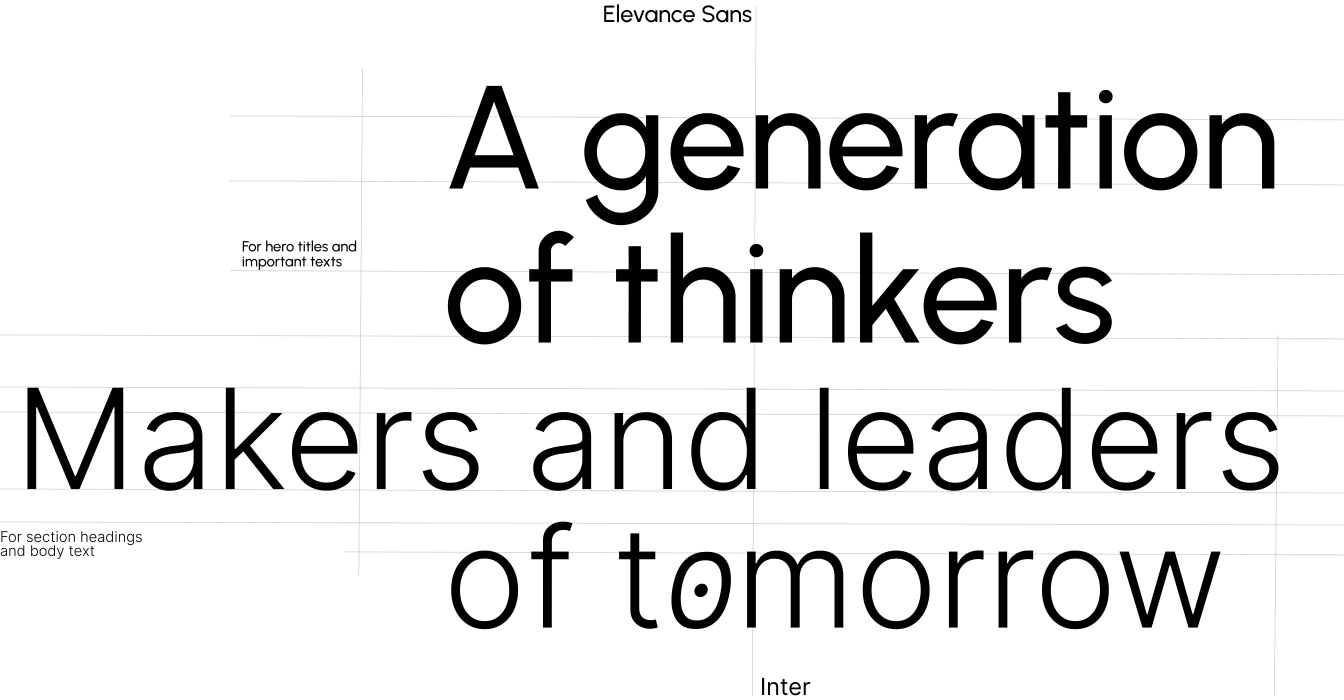
Utility 1
Utility 2
#E80000
#05BBB5
Primary accent
Secondary
#FAFAFA
Background
#E8E8E8
Secondary accent
Tertiary accent
Primary text
Secondary text
#E1EDFF
#C6B8E0
#25222B
#534C5D
Key design decisions
Decision 1
Introducing appointment scheduling from scratch.
Decision 2
Quick Bite: replacing passive content browsing with intelligent assessment.
Decision 3
Proactive emergency support surfacing on the homepage.
Final designs
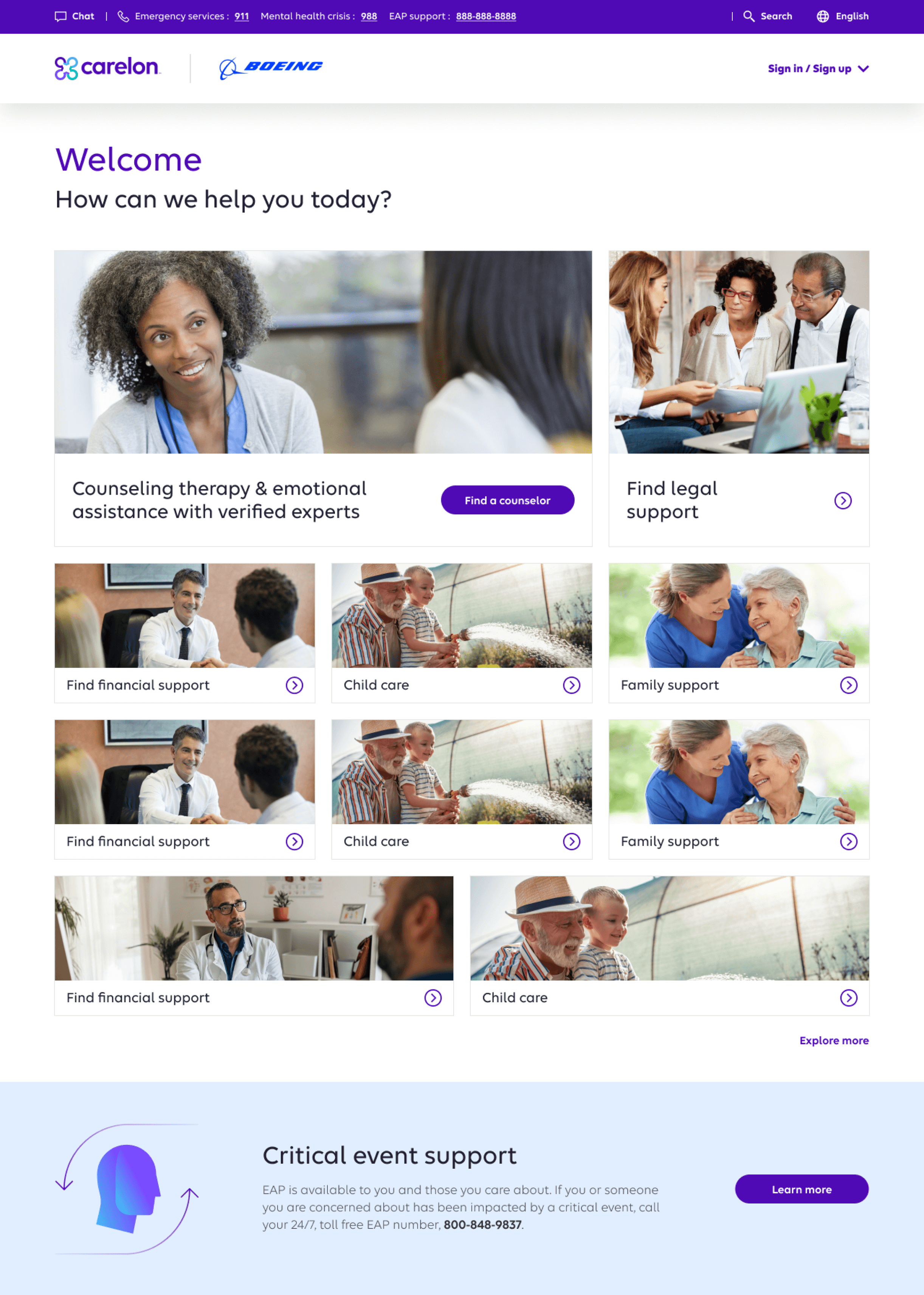
Modular layout and immediate access to critical event support.
On the homepage itself the members can see a banner if there is any emergency detected in their vicinity with all the local and government resources.
Because this portal had to be white-labeled for different employers like Verizon, we had to design this hero section to be highly configurable without breaking the layout.
Emergency support accessibility
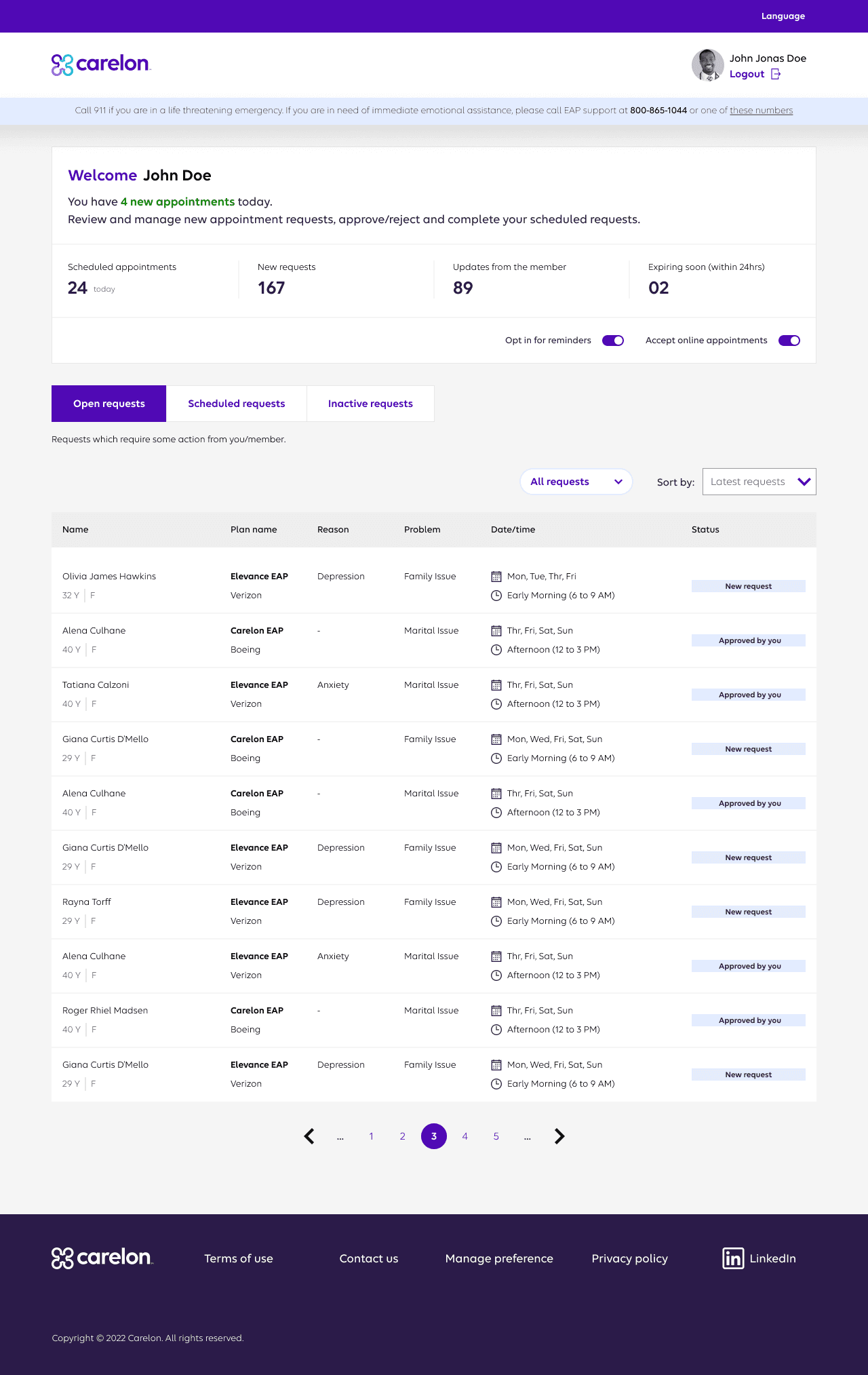
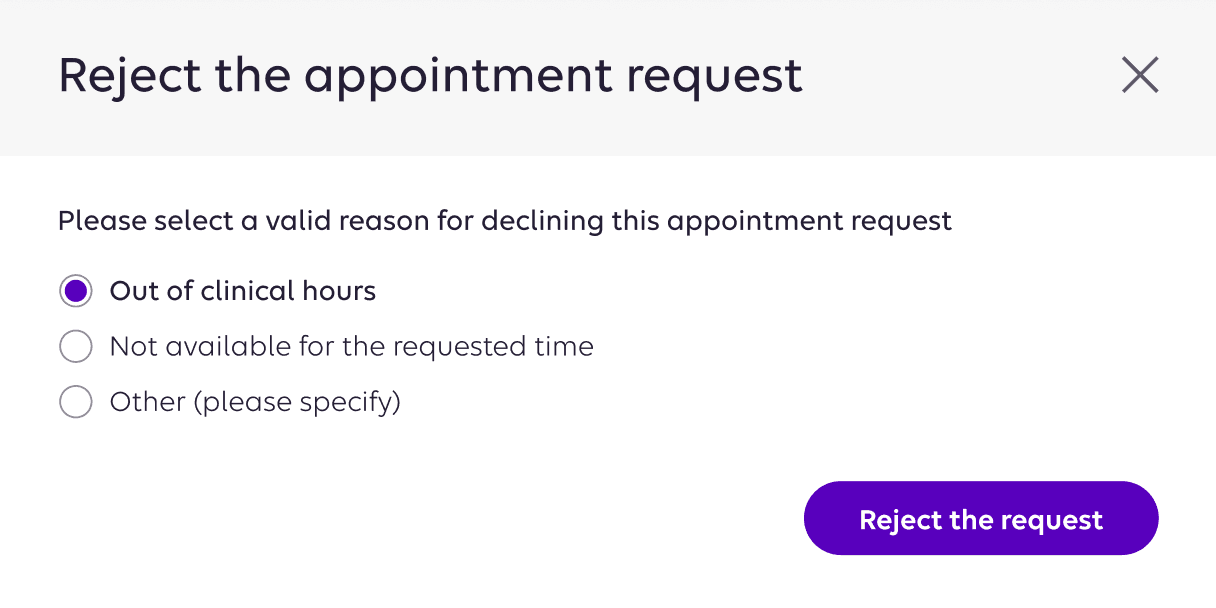
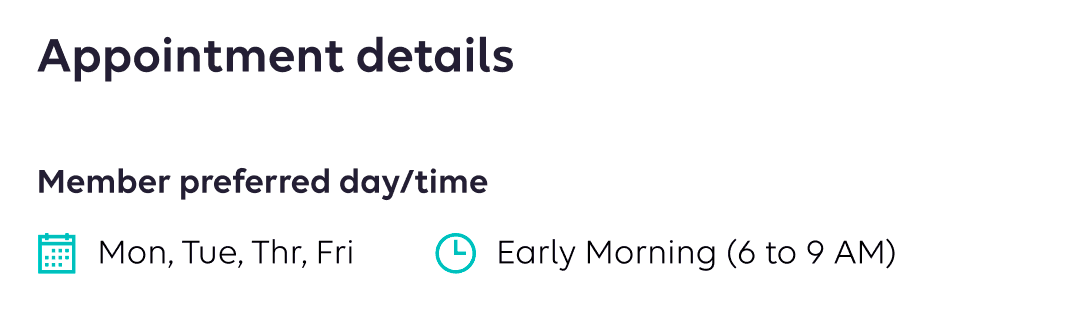
Appointment requests are easily accessible and manageable for providers.
The completely from scratch Provider Dashboard gives an overview of the appointment they are receiving from various members.
Now, it’s extremely easy for them to manage them at their fingertips, and take appointments.
Provider dashboard

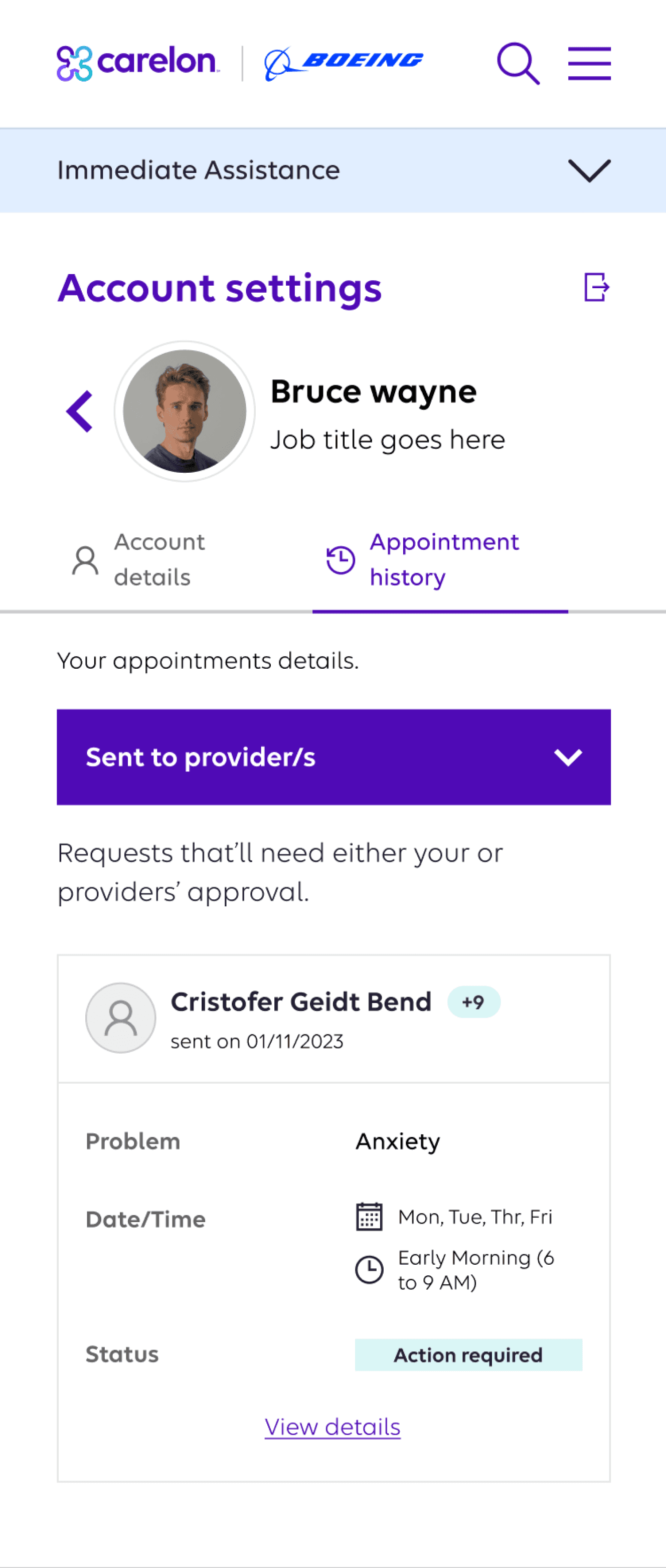
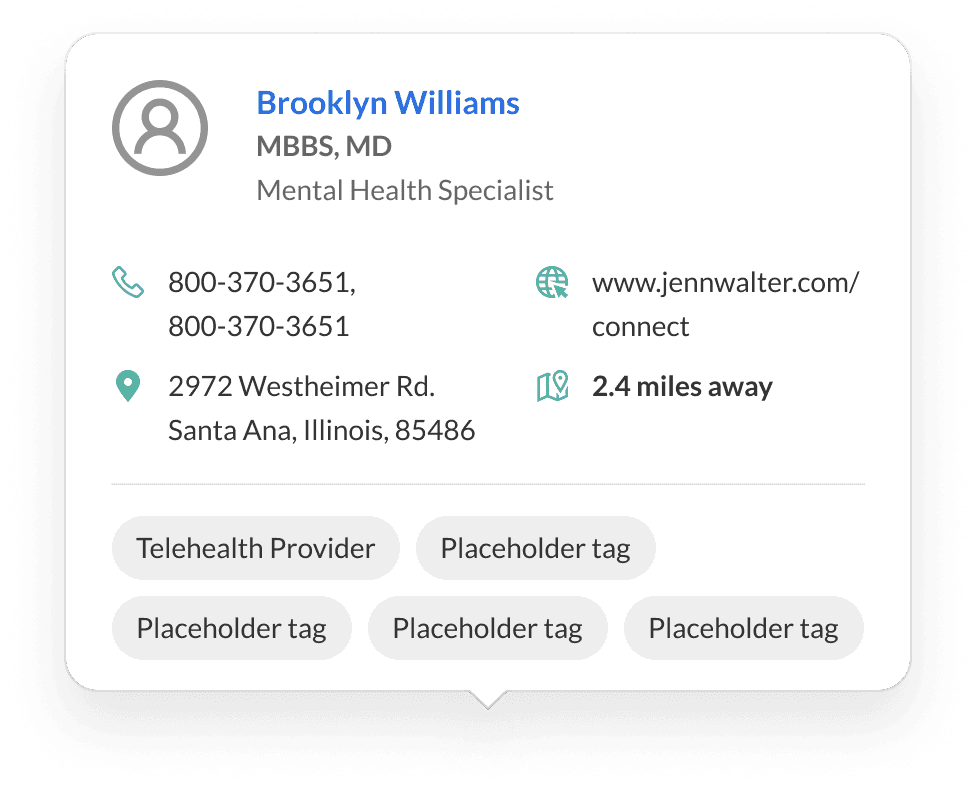
The application simplifies appointment scheduling for emotional health resources.
EAPs are meant to serve a purpose. With immense amount of data, which was poorly categorised, it overburdened users with information, due to which for the most part they never really explored their EAP benefits in the first place!
Member profile/Mobile adaptation
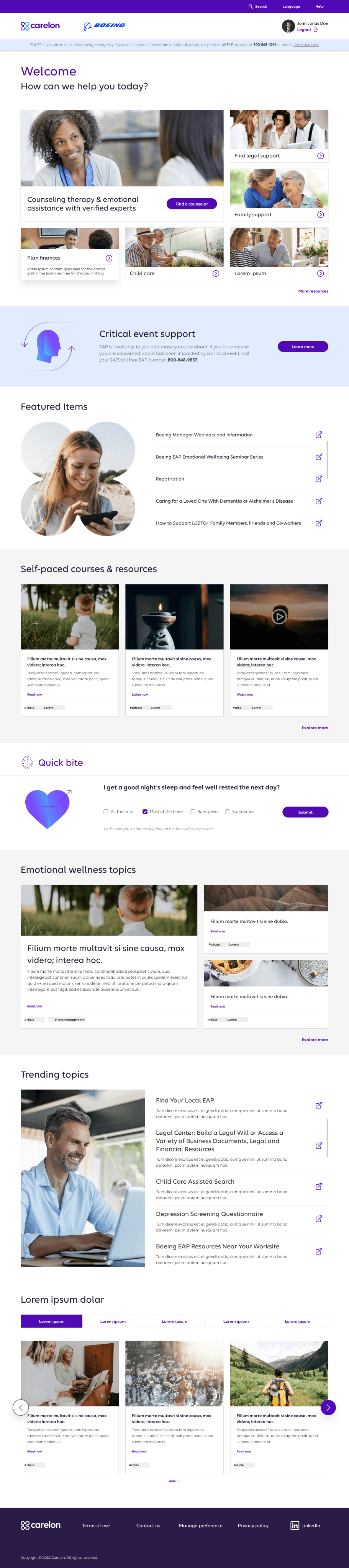
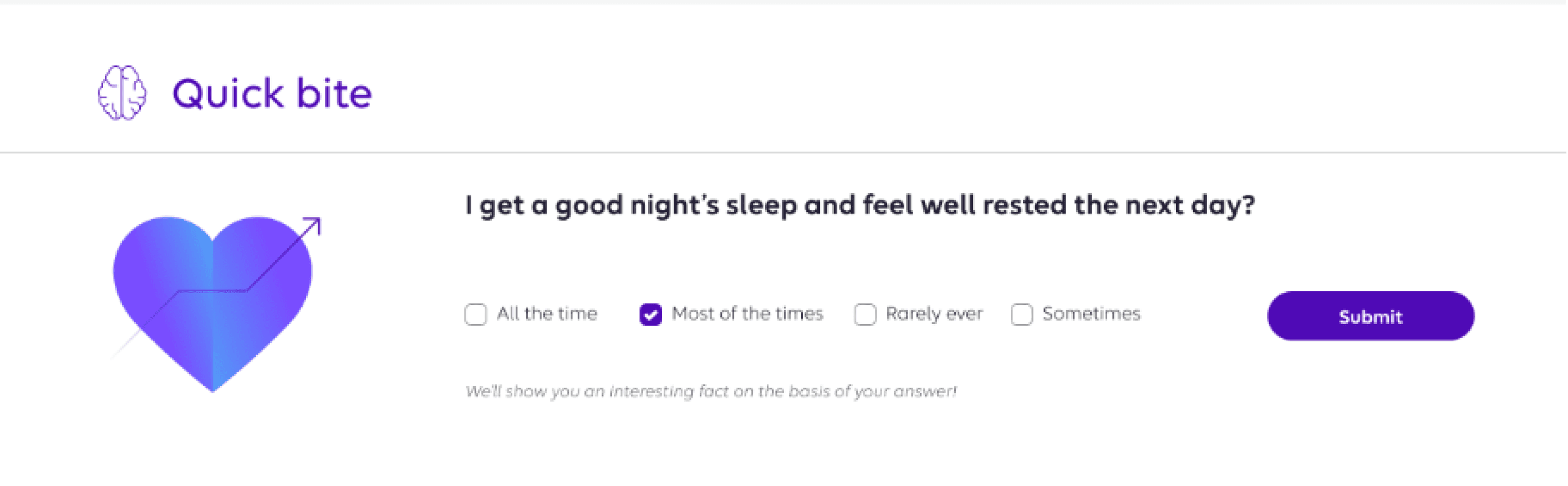
Assessing employees’ emotional well-being now is an engaging process.
With interactive features like Quick Bite, where users answer a simple questions and based on that system smartly recommends resources like articles, videos, podcasts etc.
It’s much better than scanning through a library of thousands to find something relevant.
Emotional health
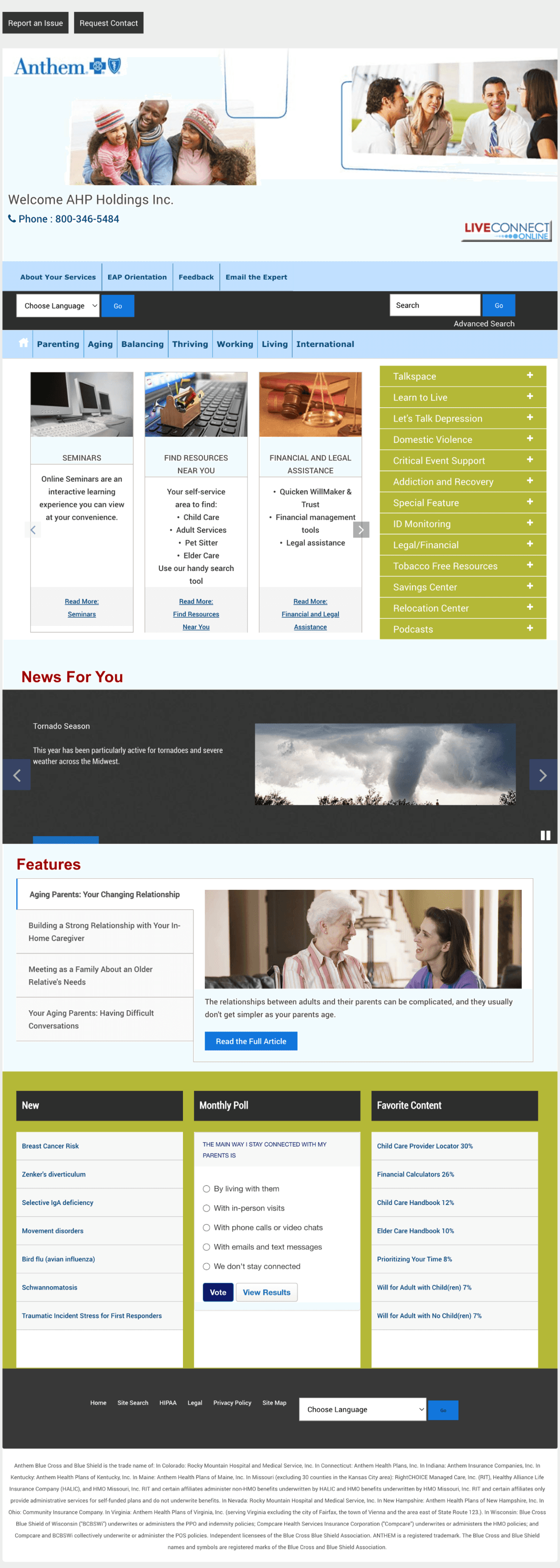
After
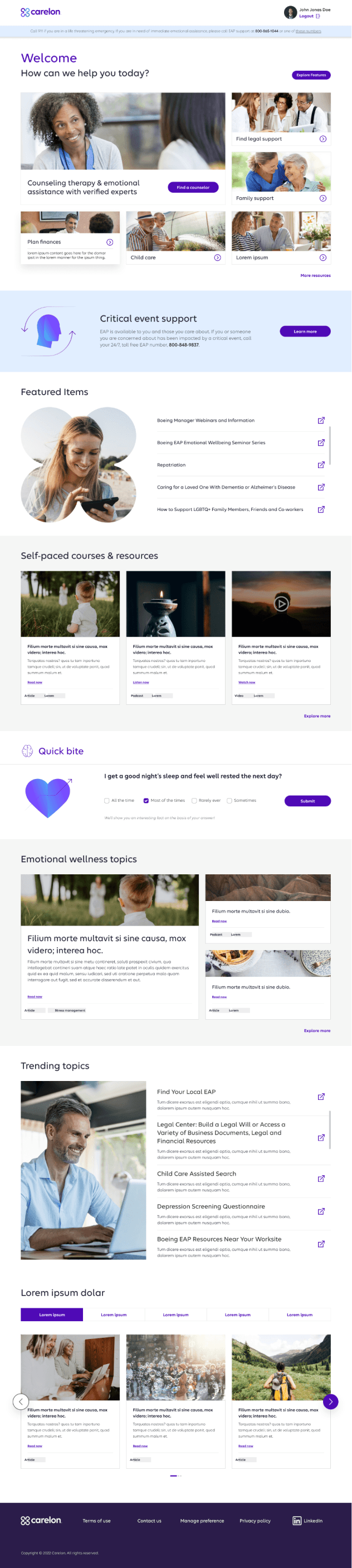
Outcome & impact
88%
boost in employee productivity
72%
reduction in absenteeism
60%
reduction in presenteeism
78%
shift from severe to moderate mental health status
The redesigned portal moved Carelon from a platform members avoided to one they could navigate independently — reducing reliance on customer service for tasks the portal can now handle itself.
The introduction of appointment scheduling, intelligent resource routing via Quick Bite, and proactive crisis support surfacing addressed the three core failure modes identified in discovery.
Finalists
Project Management Institute South Asia
© 2026 Prabhav Singh • All rights reserved